
The Beauty of the Tough Cut: Vermont Wagyu Osso Buco & Keenan 2022 Cabernet Franc
What wine goes with osso buco? Tradition says a Northern Italian red, but Keenan’s 2022 Cabernet Franc from the Upper Bowl Vineyard, at about 2,000 feet on Spring Mountain, is made for it. Its savory, herbal side meets the thyme, celery and tomato head-on, its freshness keeps up with the tangy sauce, and the gelatin-rich braise softens its young tannins. Decant it an hour ahead.
Download the printable recipe (PDF, 4 pages) ↓
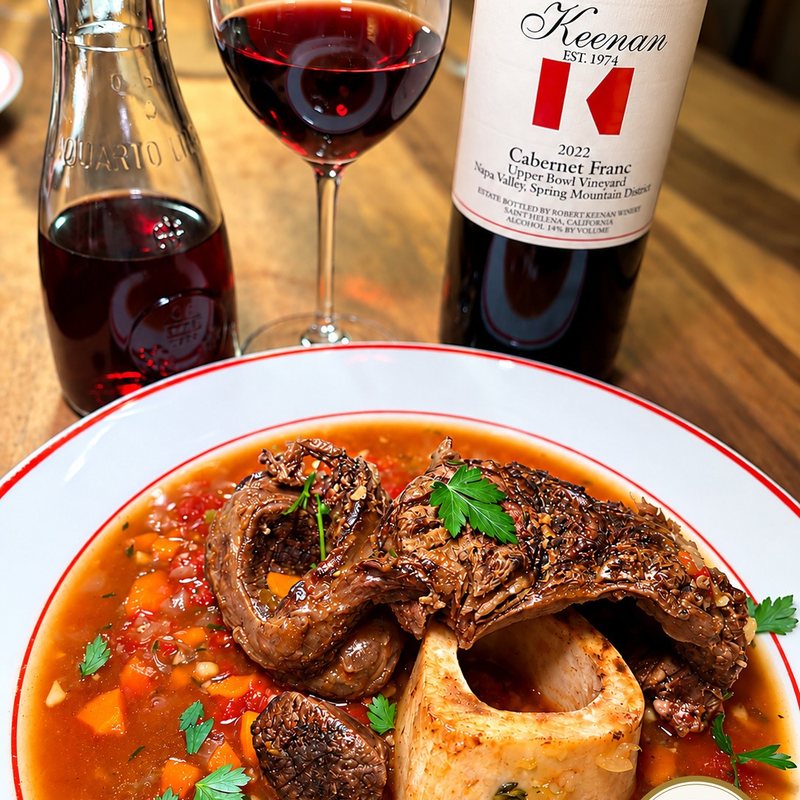
An Instant Pot braise of Vermont Wagyu beef shank, Milanese-style with white wine, tomatoes and thyme in the pot, and the Keenan 2022 Cabernet Franc, Upper Bowl Vineyard in the glass.
Wine with food
Perfect. I'll take them.
Some of the finest things in life come from parts that don't get much respect. Beef shanks, for example. Tough, full of connective tissue, loaded with collagen, and hardly anyone's first choice at the butcher counter.
Perfect. I'll take them.
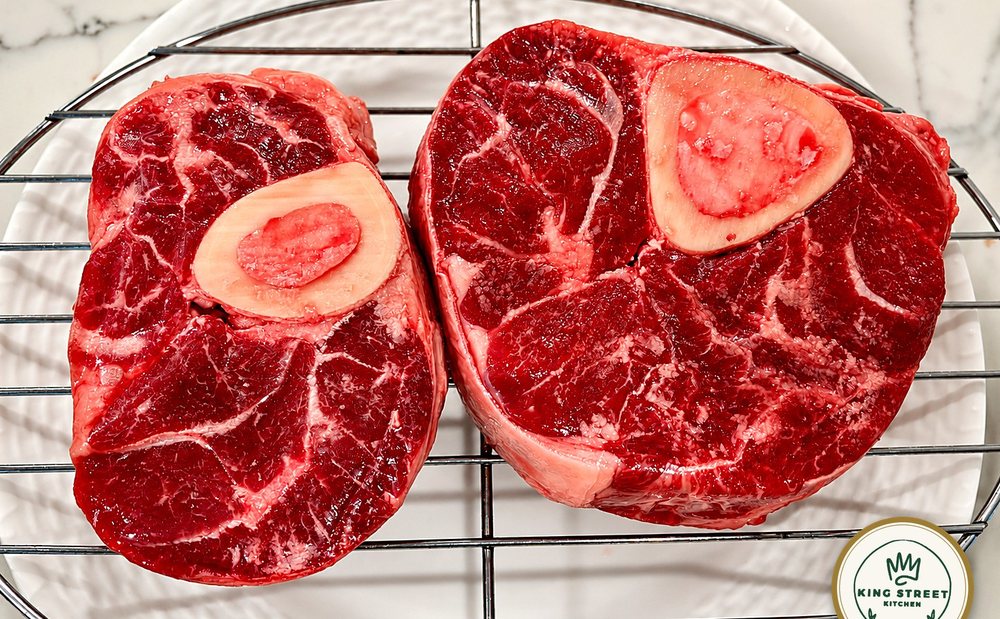
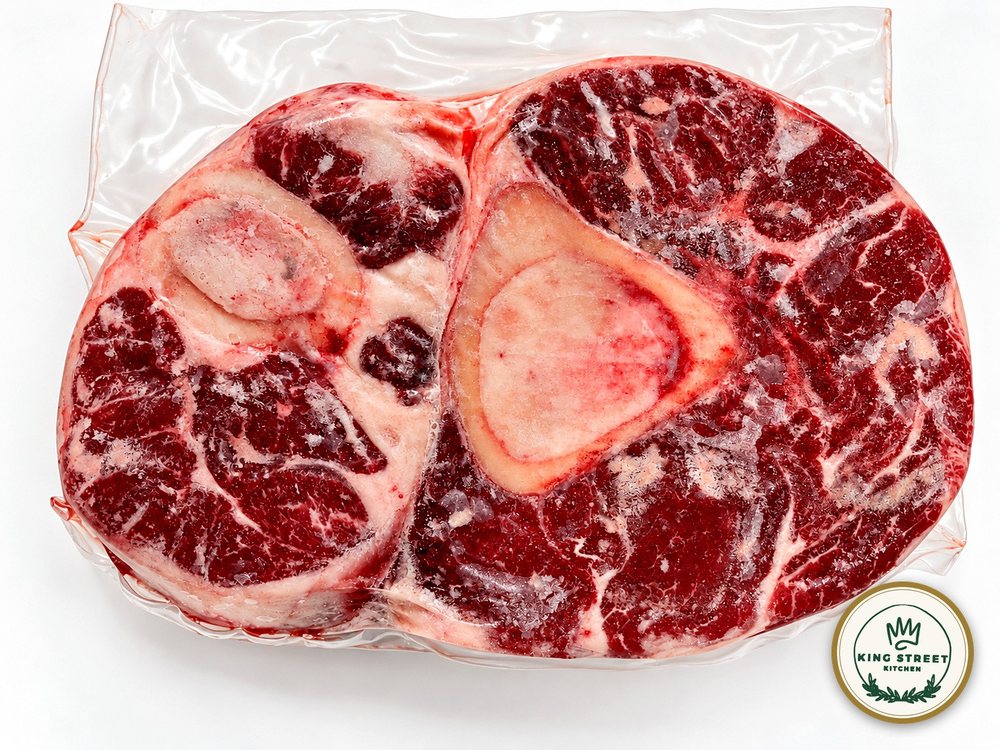
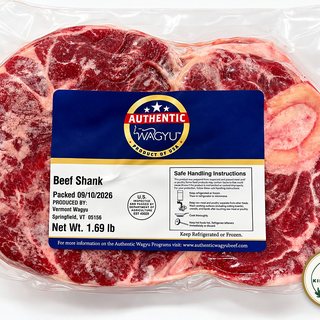
These beautiful shanks come from Dr. Sheila Patinkin's Vermont Wagyu. While most associate Wagyu with luxurious, marbled steaks, I'm fascinated by what happens when lesser-celebrated cuts receive the attention they deserve.
Enter Osso Buco. Traditionally a Milanese preparation featuring veal shanks, Osso Buco means "bone with a hole." Inside? Marrow. Surrounding it? Connective tissue that transforms into silky gelatin under heat and moisture. Extraordinary richness follows.
Tradition might suggest a Northern Italian red. Barolo would be magnificent. But the mountains of Napa Valley have something to say about that.
Enter Michael Keenan's 2022 Spring Mountain District Cabernet Franc. Savory character, vibrant acidity, herbal complexity, and beautiful structure. Everything needed to complement deeply flavored Wagyu without overwhelming it. But it goes in the glass, not the pot. In the pot, I stayed true to Milan: a dry white wine joins the tomatoes, aromatics, stock, and thyme. Tradition in the pot. A challenge at the table.
And here's where tradition meets technology. The Instant Pot. Centuries of culinary wisdom, modern pressure cooking. What once required hours of gentle braising can now achieve remarkable tenderness in a fraction of the time.
Respect the ingredients. Understand the science. Use the tools. Because great cooking isn't about blindly following tradition. It's about understanding why traditions work and knowing when to challenge them.
Serves 2 · Prep 20 minutes · Dry brine 4 hours minimum, overnight ideal · Cook about 90 minutes, about 25 of them hands-on · Wine Keenan 2022 Cabernet Franc, Upper Bowl Vineyard
Why the shank
The shank is the lower leg. It works hard every day, so it is packed with connective tissue made of collagen. Cook it fast and hot like a steak and it is tough and chewy. Cook it low, slow and wet, and that collagen gradually converts into gelatin: the meat falls apart and the sauce turns rich and silky. That is the whole magic trick of a braise.
Why the pressure cooker works. At normal pressure, water boils at 212°F. Under an Instant Pot's high pressure, it boils at approximately 240°F. Hotter liquid breaks collagen down faster, so under an hour of pressure cooking can do what typically takes 2½ to 3 hours on the stove. Thickness matters as much as weight.
Don't skip the marrow. The bone in the middle is the "hole" in osso buco. Scoop out the soft marrow and spread it on your fork or stir it into the sauce.
The wine: 2022 Cabernet Franc, Upper Bowl Vineyard
94 points, Vinous (Antonio Galloni), December 2024. 92 points, James Suckling, March 2025.
Upper Bowl is Keenan's highest vineyard, at about 2,000 feet on the estate in the Spring Mountain District. Suckling finds black cherry, blackberry, mocha and licorice, with firm tannins and a slightly leafy, cedar finish. Galloni notes strong Cabernet Franc character and classic Spring Mountain grip.
- Variety: 100% Cabernet Franc
- Vineyard: Upper Bowl, estate, about 2,000 feet
- Harvest: September 12 and October 4, 2022
- Oak: 20 months, French and American
- Alcohol: 14%
- Acidity: 0.61 g/100 mL
- pH: 3.82
- Bottled: July 2, 2024
- Production: 553 cases
Why this pairing
Cabernet Franc has a savory, herbal side, and it meets the thyme, celery and tomato head-on. Tomato is tangy, so the wine needs enough freshness to keep up. This is a young wine with firm tannins; Suckling suggests drinking it from 2028. The rich, gelatin-laden braise is a beautiful counterpoint: protein and fat in the dish help soften young tannins. Decant it an hour ahead. The braise itself is made with dry white wine, the Milanese way, so the sauce stays bright and the Cabernet Franc brings the depth at the table.
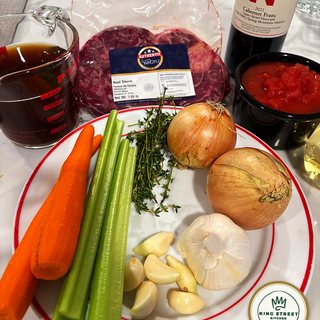
Ingredients (serves 2)
- Vermont Wagyu beef shanks: 2 cross-cut pieces, about 1.5 lb total (mine were 1.69 lb)
- Kosher salt: a scant 1 tsp for the dry brine (I used Aldi's), plus a pinch in the braise. Brands differ: that's about ¾ tsp Morton or 1¼ tsp Diamond Crystal.
- Beef tallow: 1–2 tsp, for the sear. Olive or avocado oil also work.
- Dry white wine: 1 cup, one you'd happily drink. The Keenan Cabernet Franc is for the glass.
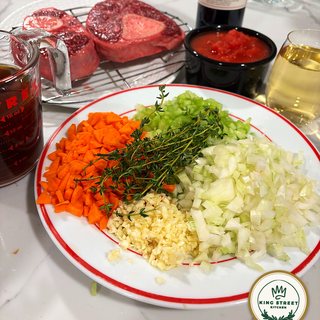
- Yellow onion: 1 medium, minced
- Carrots: 2 medium, chopped
- Celery: 2–3 stalks, chopped (I used 3; my wife voted for 2)
- Garlic: 4–5 cloves, minced or grated on a microplane
- Fresh thyme: 5–6 sprigs (or about 1 tsp dried)
- Diced tomatoes: 1 can (14.5 oz)
- Beef stock: 1 cup, high quality
- Black pepper: to taste
- Cornstarch or tapioca starch: 1 tbsp, optional, to thicken
- Fresh parsley: chopped, for garnish
- Gremolata (optional): 1 lemon, zested; 2 tbsp parsley, finely chopped; 1 small garlic clove, microplaned
Key equipment
- 6-quart Instant Pot: tested in a 6-quart, or a Dutch oven for the stovetop or oven method
- Wire rack and a plate or sheet pan: for tempering and resting the seared shanks
- Microplane, tongs, wooden spoon and a wide spatula
The method
1. Dry brine. Salt the shanks on all sides with kosher salt. Leave them uncovered in the fridge for at least 4 hours. Overnight is even better.
2. Temper and prep. 30–60 minutes before cooking, take the shanks out of the fridge to take the chill off. Meanwhile, prep every ingredient and set it all out, organized and ready to go.
3. Sear. Set the Instant Pot to "Sauté" on high and melt the tallow. Brown the shanks on both flat sides (about 3 minutes each), then stand them up and brown the edges (3–4 minutes). Total: 8–10 minutes. You want a deep golden-brown color. The goal is browning, not cooking the meat through. The pressure cooker does that.
4. Rest. Move the seared shanks to a rack set over a plate or sheet pan.
5. Deglaze. Pour in the wine and scrape up the browned bits (the fond) from the bottom of the pot. Simmer until it has reduced by about half. Much of the alcohol cooks off; some always stays.
6. Vegetables. Add the onion, carrot, celery and garlic. Stir and cook for 90–120 seconds. You shouldn't need more fat, but if another teaspoon helps, add it.
7. Build the braise. Add the thyme, stock and a little salt and pepper. Stir, and scrape the bottom clean. Return the shanks and any juices to the pot. Spoon the tomatoes over the top and don't stir again. Thick tomato sitting on the bottom is a common cause of the Instant Pot "Burn" warning.
8. Pressure cook. Lock the lid, seal the valve, and set High Pressure for 40 minutes for about 1.5 lb of shank. Larger shanks (about 2 lb)? Add 5–7 minutes. The pot needs 10–15 minutes to come up to pressure before the timer starts.
9. Natural release, then vent. Let the pressure come down on its own for 10 minutes, then turn the valve to "Venting" to release the rest. Keep your hands and face away from the vent. My test cook: I quick-released right at 40 minutes. The shanks were tender, but my wife said they could use about 5 more minutes. The 10-minute natural release gives them that gentle extra time, and it keeps hot liquid from spitting out of the vent. Check with a fork: the meat should pull apart easily. Still tough? Seal it and cook 5–10 more minutes on High. Cook until fork-tender, but no longer.
10. Lift out the shanks. Use a wide spatula or slotted spoon to move the shanks and bones to a plate. They should be very tender and may fall apart. That's a good thing. Fish out the thyme stems.
11. Finish the sauce. Two options. Set the pot to "Sauté" and simmer the liquid down to concentrate the flavor. Or, if you're hungry: stir 1 tbsp cornstarch or tapioca starch into a few tablespoons of cold water. When the sauce is bubbling, swirl the mixture in a little at a time until it is as thick as you like.
12. Serve. Spoon the sauce and vegetables into wide bowls, add the shanks, and top with chopped parsley. Optional, and worth it: mix the gremolata (lemon zest, parsley, garlic) and sprinkle it on top for a bright, fresh finish. Pour the Cabernet Franc.
The whole lesson: about 25 minutes of hands-on work. The pressure cooker does the rest. Respect the ingredients. Understand the science. Use the tools.
Sourcing and variation notes
No Instant Pot? The old-fashioned way works. Same steps in a Dutch oven, then cover and braise in a 325°F oven or at a bare simmer on the stove for about 2½–3 hours, until fork-tender. It costs time and attention. The Instant Pot uses physics and chemistry to save the one commodity we can never get back: time.
Other cuts. Short ribs would be amazing. Regular beef shank works too, and the classic Milanese version uses veal shank. Stock: I used Kitchen Basics; homemade is even better.
Where to buy. Dial up Vermont Wagyu and see if they have more! Have a farm nearby? Stop in and ask. Regular beef shank is often in the supermarket meat case (sometimes sold as "soup bones"), and international markets are a good bet. Wagyu shank, you'll need to order.
Wine in the pot. I used white, the traditional Milanese choice. Red works too (the Cabernet Franc would be lovely in the pot), even pink. Just make sure it's a dry wine you would happily drink. Use good wine!
Why the microplane? Grating garlic breaks open more of its cells. That lets an enzyme (alliinase) turn a compound called alliin into allicin, the source of garlic's sharp, punchy flavor.
Go classic: gremolata. Milan's traditional topping (see step 12) cuts through all that richness with fresh lemon and raw garlic, for almost no carbs.
A note on the plate. Want a carb on the side? Northern Italians would reach for risotto (saffron risotto is the classic Milanese partner) or creamy polenta. Roasted potatoes or a crusty Italian bread for sopping up the sauce work too. None of these are in the numbers below, and they add meaningful carbs. Lower-carb: mashed cauliflower or sautéed greens.
Leftovers. Even better the next day. Refrigerate within 2 hours in shallow containers; eat within 3–4 days. Chilled, the sauce sets like jelly. That's the gelatin from all that collagen. Rewarm gently, covered, until steaming hot.
Nutrition, estimated per serving
As written (half the recipe): about 600 calories; 52g protein (35% of calories); 30g total fat (45%); 24g carbohydrate (16%); alcohol about 4%. With 1 tbsp starch: about 615 calories; 52g protein (34%); 30g fat (44%); 28g carbohydrate (18%).
Key micronutrients, based on about 6 oz cooked beef per serving: zinc about 11mg (100% DV), B12 about 4mcg (167%), selenium about 40mcg (73%), B3 (niacin) about 8mg (50%), iron about 4.5mg (25%), vitamin A from the carrots about 500mcg (56%).
Sodium is roughly 1,400–1,500mg per serving as written (an estimate; salt brands vary a lot). About half comes from the brining salt; the rest from the stock, the canned tomatoes, the pinch of salt in step 7, and the beef and vegetables themselves. To trim to roughly 1,000–1,100mg, use no-salt-added tomatoes and unsalted stock, and skip the pinch in step 7. Taste at the end instead.
How we got here: about 30% of the 1.69 lb package is bone, leaving about 1.2 lb raw meat, or about 6 oz cooked per serving. Carbs are total, not net; most come from the carrots, onion and tomatoes (about 5g fiber). Alcohol: the USDA estimates 25–35% survives a braise of this length; we used 30%, about 25 calories per serving. Marrow is not included: about 1 tbsp (15g) per serving adds roughly 110 calories, almost all fat. Wagyu varies in fat; all values are estimates.
Where to source
Vermont Wagyu beef shank from Dr. Sheila Patinkin at Spring-Rock Farm, Springfield, Vermont, on (802) 885-7812. In September 2025, Vermont Wagyu became the first U.S. farm to ship Certified Authentic Wagyu beef, a USDA-certified program of the American Wagyu Association; the seal is on the package. Steaks get the headlines, but the whole animal deserves respect. Ask about shanks.
Keenan 2022 Cabernet Franc, Upper Bowl Vineyard, from Michael and Reilly Keenan, Spring Mountain District, Napa Valley, on (707) 963-9177. Robert Keenan founded the winery in 1974; only 553 cases of the 2022 Cabernet Franc were made.
King Street Kitchen, in partnership with Preston-Layne & Partners, is a contracted brand ambassador for Keenan Winery, representing the wines across the eastern United States. All other producers named here are featured because we believe in them and use their products ourselves.
"Source the Best. Cook the Truth. Serve the Soul." Cook with a purpose.