
Vermont Wagyu Rib Eye & the 2021 Keenan Reserve Cabernet
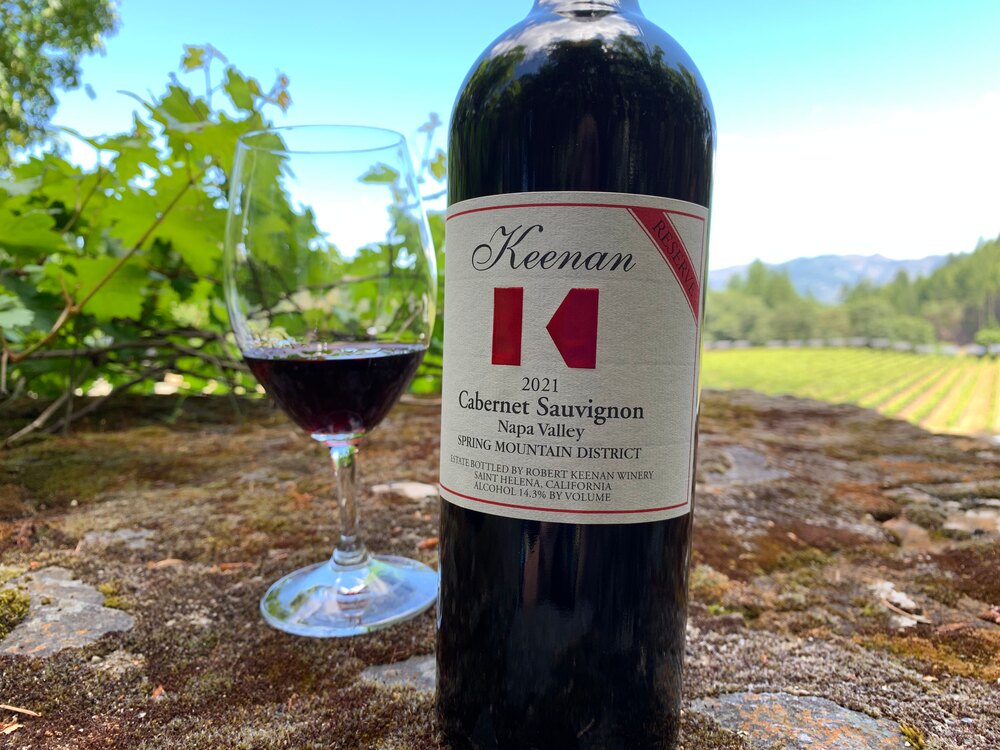
What wine goes with a Wagyu rib eye? A structured mountain Cabernet — Keenan's Spring Mountain Reserve Cabernet Sauvignon. Its tannins cut through the richness of full-blood Wagyu fat, and the mountain fruit echoes the blueberry in the vinaigrette. The full reverse-sear method is below.
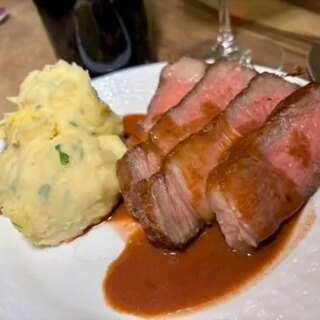
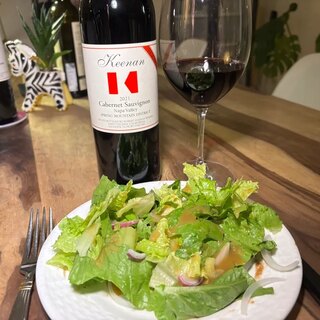
Reverse seared, with a pan sauce, cheesy garlic smashed potatoes and a blueberry vinaigrette salad, alongside the Keenan Spring Mountain Reserve Cabernet Sauvignon.
Wine with food
What happens when excellence converges
Two of the world's best farms and farmers, one table, one dinner. As a serious in-home cook, the first job is to find and buy the farm first.
High above the valley floor at 1,700 feet, Keenan combines the historic soul of a 1904 ghost winery with forward-thinking, solar-powered sustainability. The result is wine defined by intense concentration, muscular structure and pure mountain character.
Rooted on a historic 1790 Vermont pasture, Vermont Wagyu combines low-stress land stewardship with meticulous, data-driven science to raise 100% full-blood Japanese Wagyu cattle, verifying every lineage with genetic precision. Dr. Sheila Patinkin, a former pediatrician, brought medical rigor to Vermont's pastures and became one of the country's premier breeders of DNA-verified full-blood Wagyu.
What follows is less a recipe than a showcase. The farmers have already done the heavy lifting. This is about stewardship.
A note on ingredients
Every ingredient here was chosen with intention. The thyme came from the garden, picked specifically for how it works with Cabernet Sauvignon — a Merlot would call for something different. The beef broth is homemade stock. The butter is Isigny Ste-Mère, cultured and churned in Normandy. The salt is Vermont Wagyu's own heirloom blend. None of it is accidental. Cook with the wine in mind from the beginning, not as an afterthought.
What you need
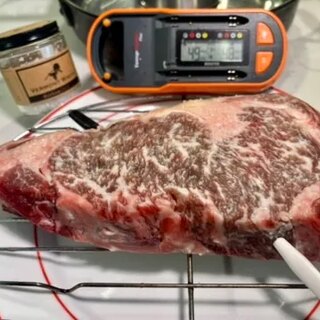
The rib eye. One Vermont Wagyu rib eye, around 24 ounces, bought frozen. Vermont Wagyu heirloom salt, generously, for the dry brine. Half a teaspoon of beef tallow for the sear.
The pan sauce. 40g yellow onion in large slivers; 15g garlic as whole cloves smashed flat, skins and all; several sprigs of garden thyme; a tablespoon of tomato paste; half a cup of the Keenan Reserve Cabernet; half a cup of homemade beef stock; two tablespoons of cold Isigny Ste-Mère butter; a splash of heavy cream; heirloom salt and black pepper.
Cheesy garlic smashed potatoes. Four Russet potatoes, two large and two medium; 20g garlic, minced; 150 to 200g grated sharp cheddar; eight tablespoons of very good butter; half a cup of full-fat sour cream; a splash of heavy cream; two to three tablespoons of chopped flat-leaf parsley; kosher salt and white pepper.
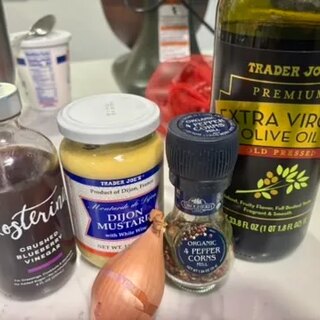
Blueberry vinaigrette. Five tablespoons of crushed blueberry vinegar; five to six tablespoons of good extra virgin olive oil; a teaspoon of Dijon; two tablespoons of finely minced shallot; a pinch of salt and six to eight grinds of pepper.
The salad. Torn romaine, thinly sliced red onion, thinly sliced celery. Build it with earthy vegetables that complement the wine.
You will want a 12-inch stainless steel skillet, a wire rack over a rimmed sheet pan, a dual-probe thermometer, a stand mixer with the paddle attachment, a three to four quart saucepan, tongs and a basting spoon.
The rib eye
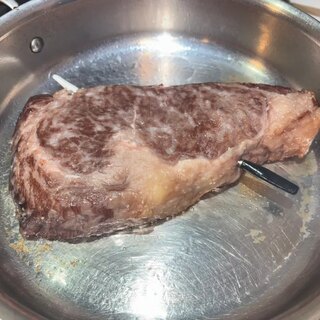
1. Thaw slowly. You most likely bought it frozen. Two nights in the refrigerator is ideal. Patience here pays dividends.
2. Dry brine. After the second night, set the cut on a wire rack over a rimmed sheet pan and coat every surface generously with salt — top, bottom, all sides, including the fat cap. Back into the refrigerator for at least twelve hours, and longer is better. The salt draws out surface moisture then reabsorbs, tenderizing the meat and setting up a dramatically better crust.
3. Temper. If dinner is at seven, pull the steak at half past four and let it come to room temperature safely before the oven. With a cut this size it is not optional.
4. Low and slow. At around six, set the oven to 225°F. Put the steak on its rack into the oven as it comes to temperature. Set the ambient alarm at 225°F and the internal alarm at 105°F. At this weight expect 35 to 40 minutes. If time is short, push to 250°F but no higher; if time is on your side, drop to 200 or 210°F for an even more controlled cook. No flipping, no fussing. This is when you make the potatoes and the dressing.
5. Rest. At 105°F internal, pull the steak onto a cutting board and rest it at least fifteen minutes. Carry-over keeps it rising, and the rest is also what lets you get the pan properly hot.
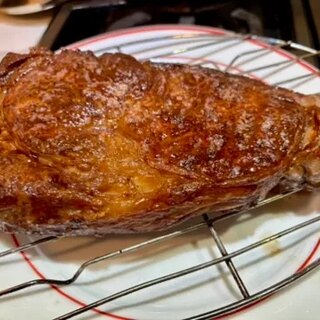
6. Sear. Get the stainless skillet ripping hot over high heat, significantly hotter than you think you need. Add the tallow and let it shimmer to the point of smoking. Lay the steak in and sear three minutes a side without moving it, building an aggressive deep-mahogany crust. Then pull the probes and hit every edge, fat cap included, for 30 to 45 seconds each. On a cut this thick the fat cap matters.
Stainless rather than cast iron, because it picks up the fond better — and the fond is what the pan sauce is built on.
The pan sauce
7. Check the fat, then deglaze. With the steak resting, check what fat is left in the pan and drain any excess beyond a tablespoon; too much throws the sauce out of balance. Keep the pan over medium-high heat, pour in half a cup of the Cabernet and scrape up every bit of fond. Reduce by roughly half, 60 to 90 seconds.
A good pan sauce should not take long. The steak is resting and the clock is ticking. Move with purpose, but do not rush it to the point of serving something thin.
8. Aromatics and tomato paste. Add the onion slivers, the smashed garlic with skins on, and the thyme. Stir 60 to 90 seconds until the onion softens and takes some color. Work in the tomato paste and cook another minute until it caramelizes and deepens. That is the backbone of the sauce.
9. Broth, butter, finish, strain. Add the beef stock and reduce until the sauce coats the back of a spoon. Off the heat, swirl in the cold butter until glossy and emulsified, add a splash of cream and adjust the seasoning. Strain through a fine mesh into a clean saucier, pressing gently on the solids. What comes through is clean and pure. Spoon it generously over the sliced steak.
The potatoes and the salad
Start the potatoes while the steak is in its low-and-slow phase.
10. Boil. Peel and cube the potatoes, cover generously with cold salted water and bring to a boil. Cook until a fork slides through without resistance, about 10 to 12 minutes, then drain thoroughly.
11. Mix. Transfer the hot potatoes to the mixer with the paddle. Add the butter in pieces, the minced garlic and the cheddar — go generous. Mix on low until just combined. A masher works perfectly well; the mixer only makes it easier. Either way, do not overwork them.
12. Cream and finish. Add the sour cream and a splash of heavy cream and mix until smooth. Do not over-mix or the starch turns gluey, and some chunks are welcome. We can always smash more; we cannot unsmash. Fold in the parsley and season with salt and white pepper.
13. The vinaigrette. Combine the minced shallot with the blueberry vinegar and let it macerate five minutes. Add the Dijon, salt and pepper, then whisk in the olive oil in a slow stream until emulsified. No sugar is needed; the vinegar carries its own fruit-forward sweetness.
14. The salad. Tear the romaine into a large bowl, add the red onion and celery, and dress lightly just before serving to keep the greens crisp. Earthy, slightly bitter greens and raw vegetables are natural partners for a mountain Cabernet.
Plating
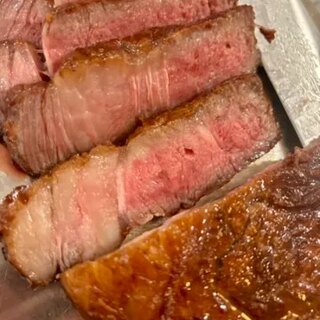
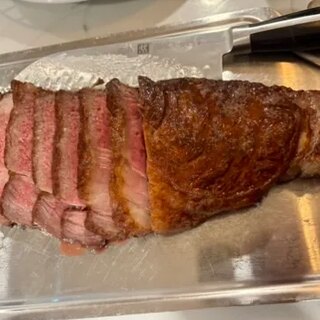
15. Slice against the grain. After five minutes of post-sear rest, slice into quarter-inch cuts. The interior should be a deep, even rose. Serve medium to medium-rare. Do not serve it rare.
16. Plate with intention. Fan the slices across one side of a warm white plate and spoon the pan sauce across and around the meat, letting it pool. Mound the potatoes opposite. Serve the salad separately.
The wine. Pour the Keenan Reserve Cabernet into a Bordeaux-shaped stem and decant 30 to 45 minutes for younger vintages. The structured tannins cut through the richness of the Wagyu fat while the mountain fruit echoes the blueberry in the vinaigrette.
Cook's notes
Reverse sear on a cut like this is close to non-negotiable. An open grill invites a fat fire and a stovetop-only cook will not deliver both the crust and the interior you are after.
Because of the extraordinary intramuscular fat in full-blood Wagyu, and particularly in a rib eye, serving this cut blue or rare does a disservice to the animal and the farmer. The fat needs heat to render. Medium-rare is the floor, not the ceiling. For a touch more pink, pull at 100°F rather than 105°F.
On portions: this cut is listed as serving two, but the truth is more nuanced. Full-blood Wagyu at this marbling is extraordinarily rich, and you will eat less than you think. It serves three comfortably, which is an awkward number for a dinner party. Call it two generous servings with intentional leftovers, or stretch it to four lighter plates.
Nutrition, estimated per serving
Wagyu rib eye, 12 oz cooked. Around 920 calories; 78g protein (34% of calories); 68g total fat (66%), of which 28g saturated; no carbohydrate; 480mg sodium. Iron 45% DV, zinc 80%, B12 210%, selenium 55%, creatine around 4g. Full-blood Wagyu fat skews strongly toward oleic acid, around 55% of the fat — the same monounsaturated fat that dominates olive oil, and a meaningful distinction from commodity beef.
Cheesy garlic smashed potatoes. Around 420 calories; 12g protein, 22g fat, 44g carbohydrate, 4g fiber, 320mg sodium, with roughly 900mg potassium.
Garden salad with blueberry vinaigrette. Around 130 calories; 1g protein, 12g fat, 6g carbohydrate, 2g fiber, 90mg sodium, with vitamin K at roughly 90% DV.
Values are approximate and vary with cut weight, fat trim and portion.
Where to source
Vermont Wagyu rib eye from Dr. Sheila Patinkin at Spring-Rock Farm, Springfield, Vermont, on (802) 885-7812, weekdays 9am to 3pm. Keenan Spring Mountain Reserve Cabernet Sauvignon from Michael and Reilly Keenan, Spring Mountain District, Napa Valley, on (707) 963-9177.
King Street Kitchen, in partnership with Preston-Layne & Partners, is a contracted brand ambassador for Keenan Winery, representing the wines across the eastern United States. All other producers named here are featured because we believe in them and use their products ourselves.
“This is what great sourcing looks like on a plate. The farmers did the heavy lifting. Your job is stewardship — don't get in the way.”